



2026 Conforming Loan Limits: What Tucson Homebuyers Need to Know
Sep 10, 2026By Derrick Polder • NMLS #207630 • Published: September 10, 2026 • Updated: September 16, 2026
Read article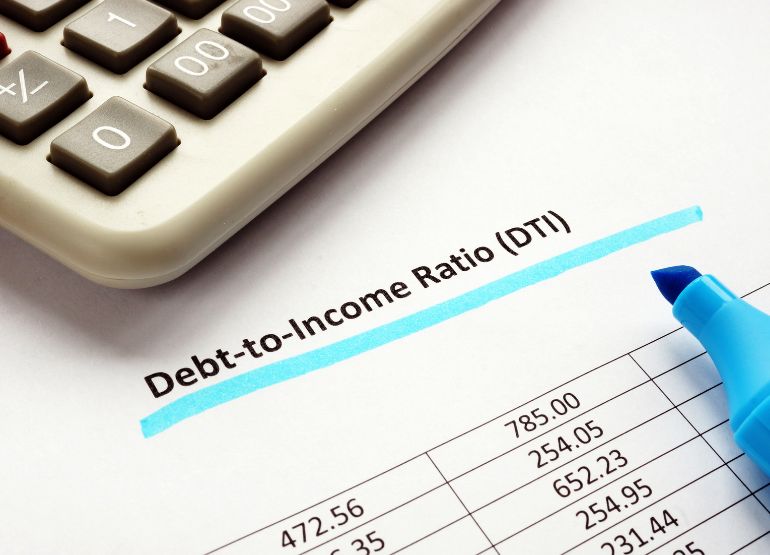
Master Your Financial Health: Learn to Calculate Your DTI with Ease!
Whenever you apply for a mortgage or other type of loan, lenders evaluate several financial factors to determine your ability to repay the debt. One of the most important measurements is your debt-to-income ratio, commonly called your DTI.
Understanding how to calculate your DTI can help you prepare for the mortgage process, improve your loan eligibility, and potentially secure better interest rates.
Debt-to-income ratios are typically used by mortgage lenders as a way of assessing their borrowers’ creditworthiness. A “good” DTI is generally agreed to be anything below 43%, though some lenders may want yours to fall below 36%. A high DTI can be a red flag that signals that you’ll struggle to manage additional household debt, which can elevate your risk in the eyes of lenders.

Your debt-to-income ratio compares your total monthly debt payments to your gross monthly income (before taxes). Lenders use this percentage to evaluate how much of your income already goes toward debt obligations.
In general:
A lower DTI tells lenders you’re more likely to comfortably manage a new mortgage payment.
Some banks and lenders offer a free DTI calculator. And using them involves the same process. You’ll enter your income and recurring monthly debts into the calculator, which will then provide you with your DTI, expressed as a percentage.
One advantage of electronically calculating your DTI is that you can see how paying down certain debts (such as your credit cards) will affect it. That can prove valuable in strategically paying down your debts prior to applying for a home or auto loan.
Calculating your DTI is fairly simple.
Start by calculating your monthly income before taxes and deductions.
This can include:
If you’re unsure of your monthly income, you can:
Lenders will often take a deeper dive into your debt-to-income ratio by splitting it up into two key components known as your front-end ratio and back-end ratio.
Here’s how each one works and how it impacts your creditworthiness:
Your front-end ratio is also known as your “housing ratio,” as it primarily focuses on housing-related costs, such as:
Lenders tend to prefer that your front-end DTI remains below 28%.
Of the two components of DTIs, lenders may be more interested in your back-end ratio calculation because of its larger scope. While your front-end ratio focuses on housing expenses, your back-end ratio involves a broader look at your overall finances.
It will include all of your monthly expenses, ranging from credit card payments to student loans to other forms of monthly expenses. As a result, it will provide a more comprehensive picture of your current financial standing.
Most lenders expect a back-end ratio of no more than 43%, though depending on the type of loan, a lender may work with you even if yours is closer to 50%.
On its own, your debt-to-income ratio will not directly impact your credit score, in part because consumer credit bureaus do not measure your monthly income. However, the factors that contribute to your DTI may impact your credit.
For example, your credit score is partly influenced by your credit utilization ratio, which is the percentage of your credit limit that you currently use. Therefore, high monthly credit card payments can raise your DTI and show that you’re using a larger portion of your credit limit, which can lower your credit score. Conversely, paying down your credit card debts can lower both your DTI as well as improve your credit score.
By now, you have all the resources you need to calculate your DTI. But what can you do if your DTI is a little higher than you anticipated?
First, don’t panic: Having a high debt-to-income ratio won’t necessarily prohibit you from securing a home or auto loan. But you may find yourself strapped with higher interest rates than if your DTI was more favorable.
Thankfully, there are some basic steps you can take to lower your monthly debts and raise your monthly income, improving your DTI in the long run:
The surest way to lower your DTI is to pay off your monthly debts as soon as possible. One strategy to do so is known as the “snowball method.” Pay off your smallest debt first, then tackle the next smallest, and so on.
Paying off short-term debts, such as credit cards, can be a particularly valuable way to lower your DTI, and you can often do it faster than paying off student loans or car loans. Make more than the minimum payment each month to get out of debt faster and avoid additional interest charges.
It may be possible to lower your monthly debts by refinancing larger loans like student and car loans. In doing so, you’ll receive a new loan with a smaller monthly payment, which can lower your DTI.
Just be careful, though, as lowering your monthly payments might mean you’re taking on a longer loan term. And that means you’ll be paying more in interest over the lifespan of the loan. Make sure to weigh the benefits of a smaller DTI with the additional interest you’re taking on.
Debt consolidation programs will allow you to bundle your debts into one simple loan, typically with a smaller payment. For instance, some credit card issuers will offer a balance transfer card with a promotional rate of 0% APR for one year. If you can transfer your loan balance(s) to one of these cards, you may be able to get out of your debt without any additional interest if you pay it off within the promotional period.
While things like groceries, streaming subscriptions, and dining out won’t directly impact your DTI, cutting back on household expenses will free up more money that you can allocate toward your debt. Additionally, cutting back on luxury purchases will mean putting even less money on your credit card, thereby preventing you from taking on additional debt.
Taking on a second job may sound extreme, but if you’re applying for a major loan, it may be worth it. A side job will increase the amount of monthly income you receive, which will help to offset the amount of debt you carry. At the same time, you’ll have more income to allocate to your debts, which can also lower your DTI.
If time is an issue, consider pursuing raises and promotions at your current job, which will help you raise your household income.
Understanding your debt-to-income ratio will better equip you for the mortgage process. If you have additional questions about the optimal DTI for your mortgage program, talk to a real estate professional. Learning to manage your debts will improve your chances of securing favorable loan terms, which can save you thousands over the course of your loan.
This article is for educational purposes only and does not constitute financial or mortgage advice. Loan programs, rates, and guidelines may change at any time. All loans are subject to credit approval and underwriting. For guidance tailored to your situation, consult a licensed mortgage professional.
By Derrick Polder • NMLS #207630 • Published: September 10, 2026 • Updated: September 16, 2026
Read article
By Derrick Polder • NMLS #207630 • Published: August 31, 2026 • Updated: September 09, 2026
Read article
By Derrick Polder • NMLS #207630 • Published: August 20, 2026 • Updated: August 31, 2026
Read article
By Derrick Polder • NMLS #207630 • Published: August 3, 2026 • Updated: August 31, 2026
Read article






Different levels of commitment - all start with a conversation.

A quick first step to review loan options and next steps with a local expert.
Ready to move forward now? Secure application - Credit review required
Not ready for a form? Ask a question and a local expert will follow up.